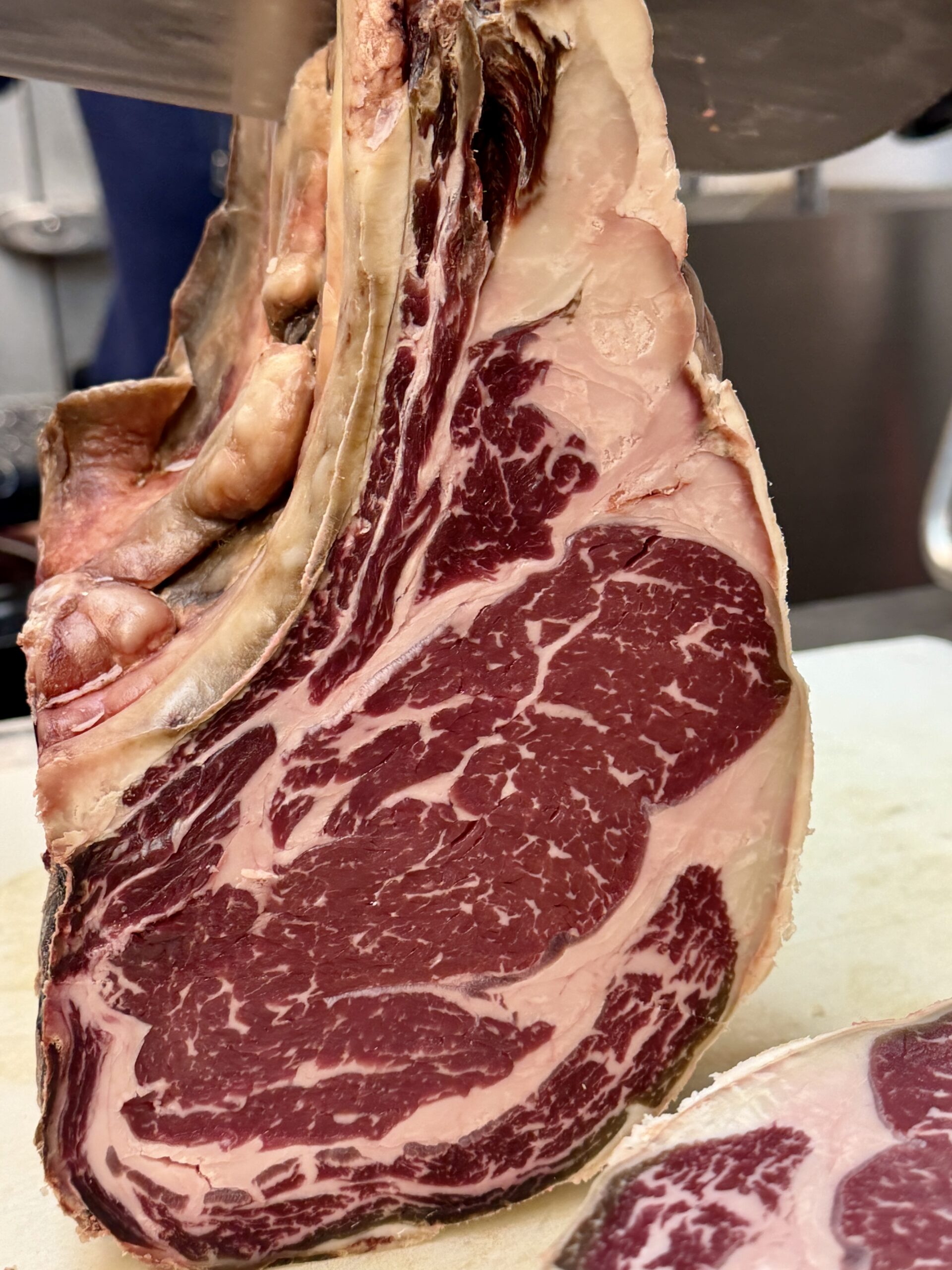

Dry-aged steak is often described as richer, more tender and more intensely beefy—but those qualities do not happen simply because a steak sits in a refrigerator for a few weeks. Traditional dry aging is a carefully managed process involving time, controlled refrigeration, airflow, humidity, natural enzyme activity and a significant loss of usable weight.
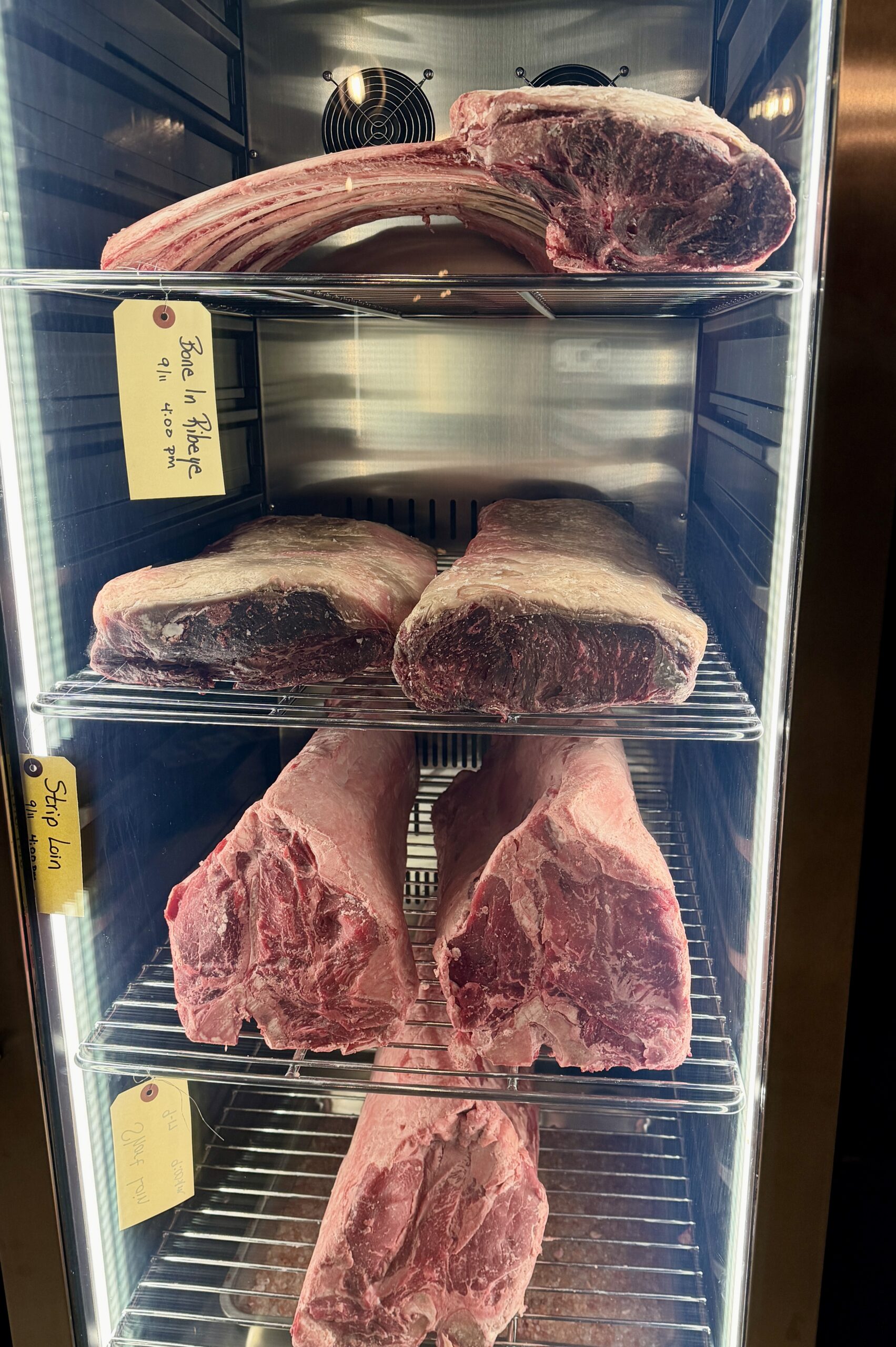
At Cellar & Flame, large sections of premium beef are placed uncovered in our dedicated dry-aging cooler. Over the following weeks, the beef gradually changes in appearance, texture, weight and flavor before it is trimmed, portioned and prepared for service.
Our First House Dry-Aged Steaks Have Arrived
Beginning Friday, October 30, guests can experience the first steaks from our in-house dry-aging program. Quantities are limited, and the available cuts may change as different selections reach maturity.
What Is Dry Aging?
Dry aging is the process of holding larger cuts of beef in a carefully controlled refrigerated environment without vacuum packaging. Unlike an individual steak, a whole loin or large bone-in section has enough exterior fat, bone and overall mass to protect the meat during an extended aging period.
Temperature keeps the beef safely refrigerated. Consistent airflow allows moisture to leave the surface, while controlled humidity helps the meat dry gradually rather than too quickly or unevenly. These conditions must remain stable throughout the aging process.
This is different from wet aging, in which beef matures inside a sealed vacuum bag. Wet-aged beef retains most of its moisture. Dry-aged beef is exposed to circulating air, producing both moisture loss and the development of its characteristic exterior.
What Happens to the Beef While It Ages?
1. Moisture gradually evaporates
Beef contains a substantial amount of water. As the meat rests uncovered in the dry-aging cooler, some of that moisture evaporates. The beef becomes lighter, but the flavor remaining within it becomes more concentrated.
The amount of moisture lost depends on the cut, the amount of exterior fat, whether the bone remains attached, the length of aging and the conditions inside the cooler. A heavily protected bone-in section will behave differently from a boneless loin with more exposed surface area.
2. Natural enzymes continue working
Naturally occurring enzymes within the beef slowly break down portions of the muscle structure. This contributes to the tenderness associated with a properly aged steak. Aging does not turn every cut into the same product, however. The original quality, marbling and structure of the beef still matter.
3. Flavor becomes deeper and more complex
Moisture concentration is only one part of the flavor change. During aging, changes within the meat’s proteins and fats help create the savory, roasted and sometimes subtly nutty qualities associated with dry-aged beef.
Longer is not automatically better. As aging continues, the flavor becomes more pronounced. The goal is to find a balance where the beef has developed meaningful dry-aged character without allowing that character to overwhelm the natural flavor of the steak.
What Is the Pellicle?
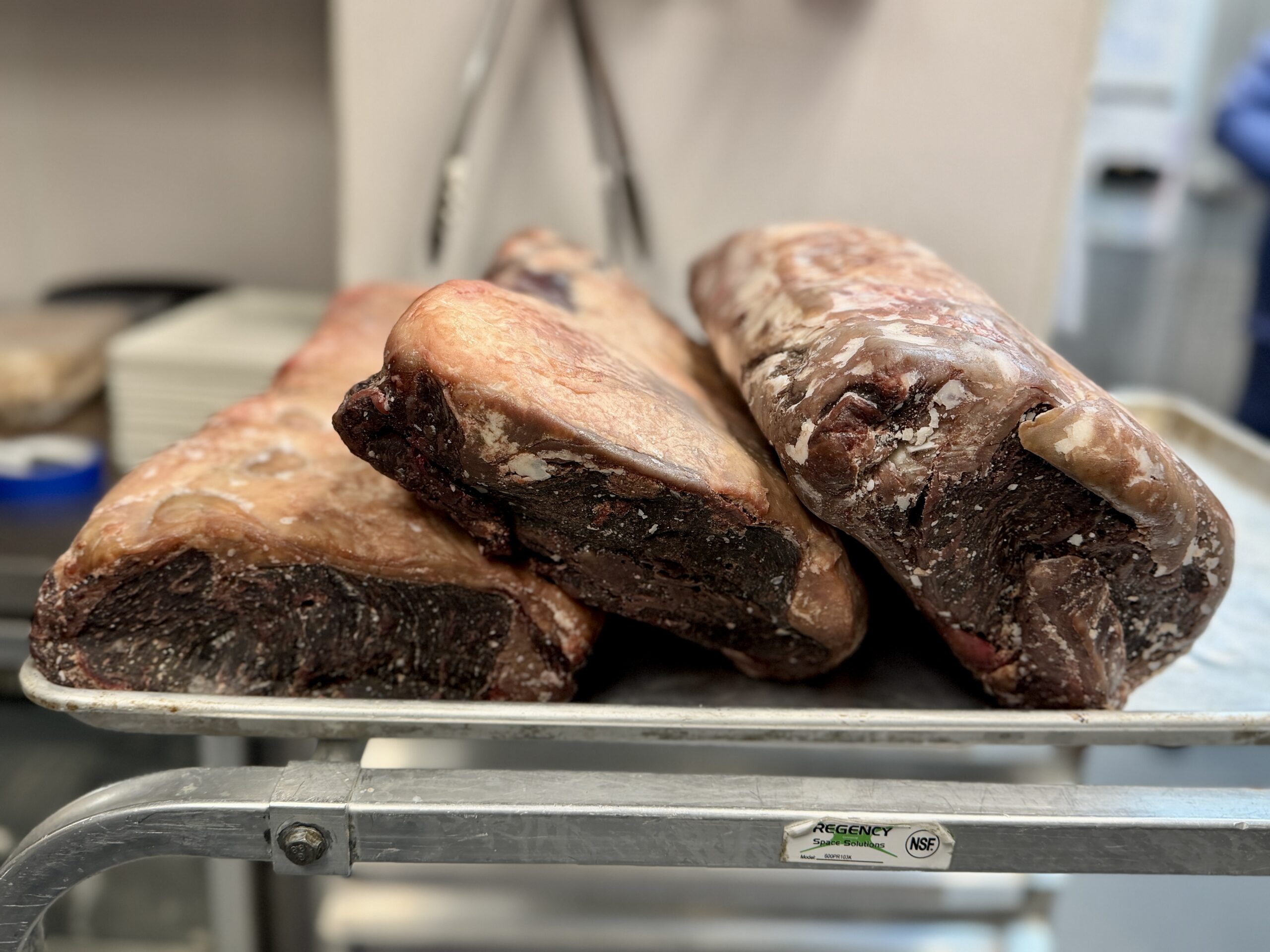
As moisture leaves the exposed surfaces, the outside of the beef darkens, firms and dries. This hardened exterior is commonly referred to as the pellicle or dry-aging crust.
The pellicle is not the browned crust created when a steak is cooked. It is the protective, dehydrated exterior that develops during the weeks the beef spends in the cooler. It helps shield the meat underneath, but it is not served to guests.
Once the aging period is complete, the culinary team carefully trims away the dark, firm pellicle along with any exterior areas that are too dry for portioning. Beneath it is the richly colored, concentrated beef that will become the finished steaks.
Why Is There So Much Loss?
A large section of beef does not come out of the dry-aging cooler weighing what it did when it went in. There are two principal forms of loss:
- Aging or moisture loss: Water naturally evaporates from the beef while it is exposed to the cooler’s circulating air.
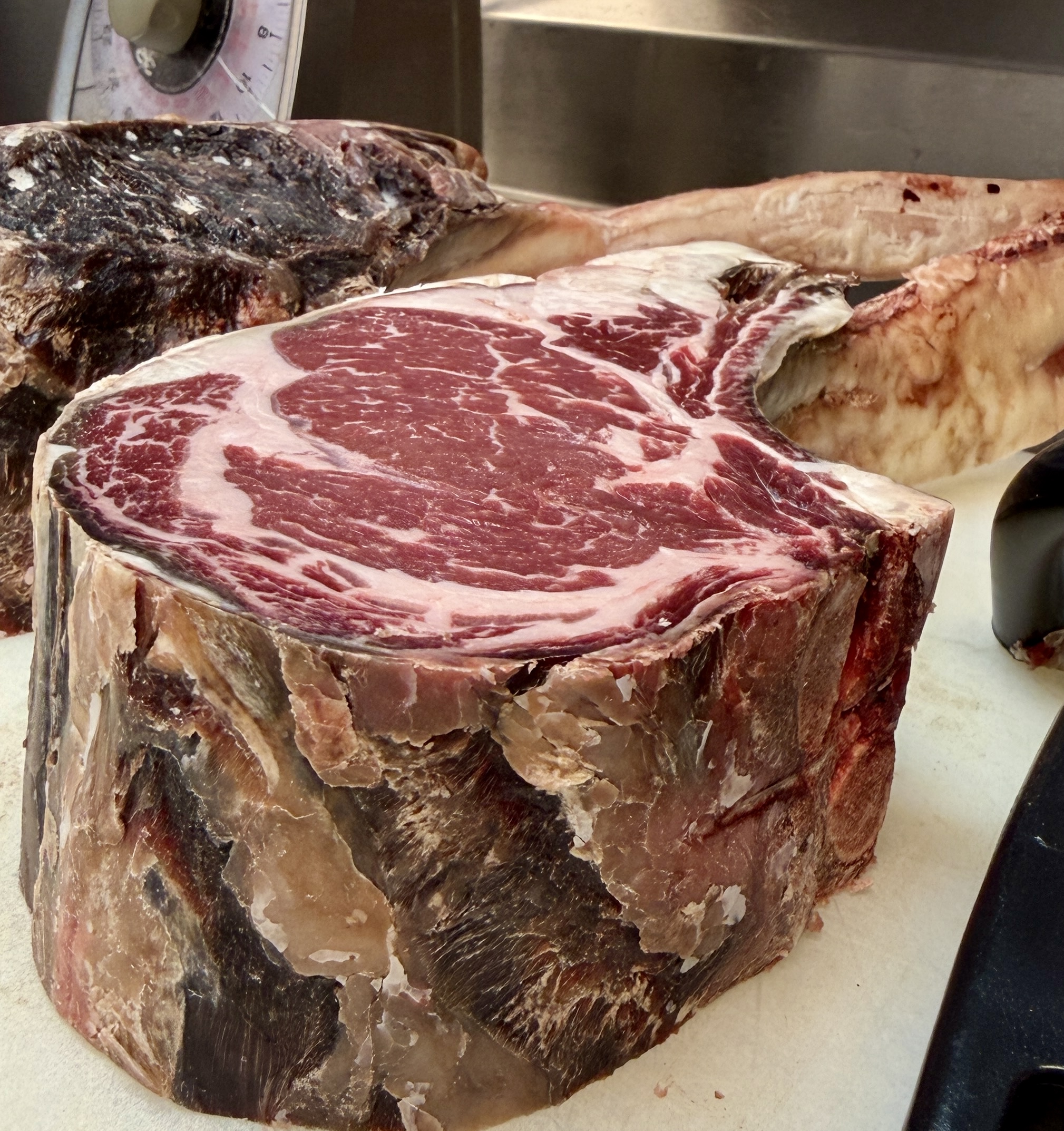
- Trimming loss: The dried pellicle and other exterior portions must be removed before the usable beef can be cut into steaks.
Beef-industry research demonstrates how quickly these losses add up. In studies of ribs and loins aged for 21 days, moisture loss alone reached approximately 4.5% to 6.5%, followed by roughly another 5% to 6.5% in trimming loss. Longer aging periods, cuts with more exposed surfaces and different cooler conditions can result in considerably greater total loss.
In practical terms, 100 pounds of beef placed into a dry-aging cooler will not produce 100 pounds of finished steak. The final yield is reduced before the steaks are ever portioned, cooked or served.
Why dry-aged steak carries a premium
The price reflects more than the original beef. It also accounts for the weeks of refrigerated storage, the space occupied in a dedicated cooler, careful monitoring, moisture loss, discarded pellicle, skilled trimming and the reduced number of finished steaks produced from each original cut.
From the Cooler to the Cutting Board
When a section of beef has reached its intended aging point, it is removed from the cooler and evaluated. The culinary team then trims the exterior, following the shape of the beef and removing the pellicle while preserving as much of the properly aged interior as possible.
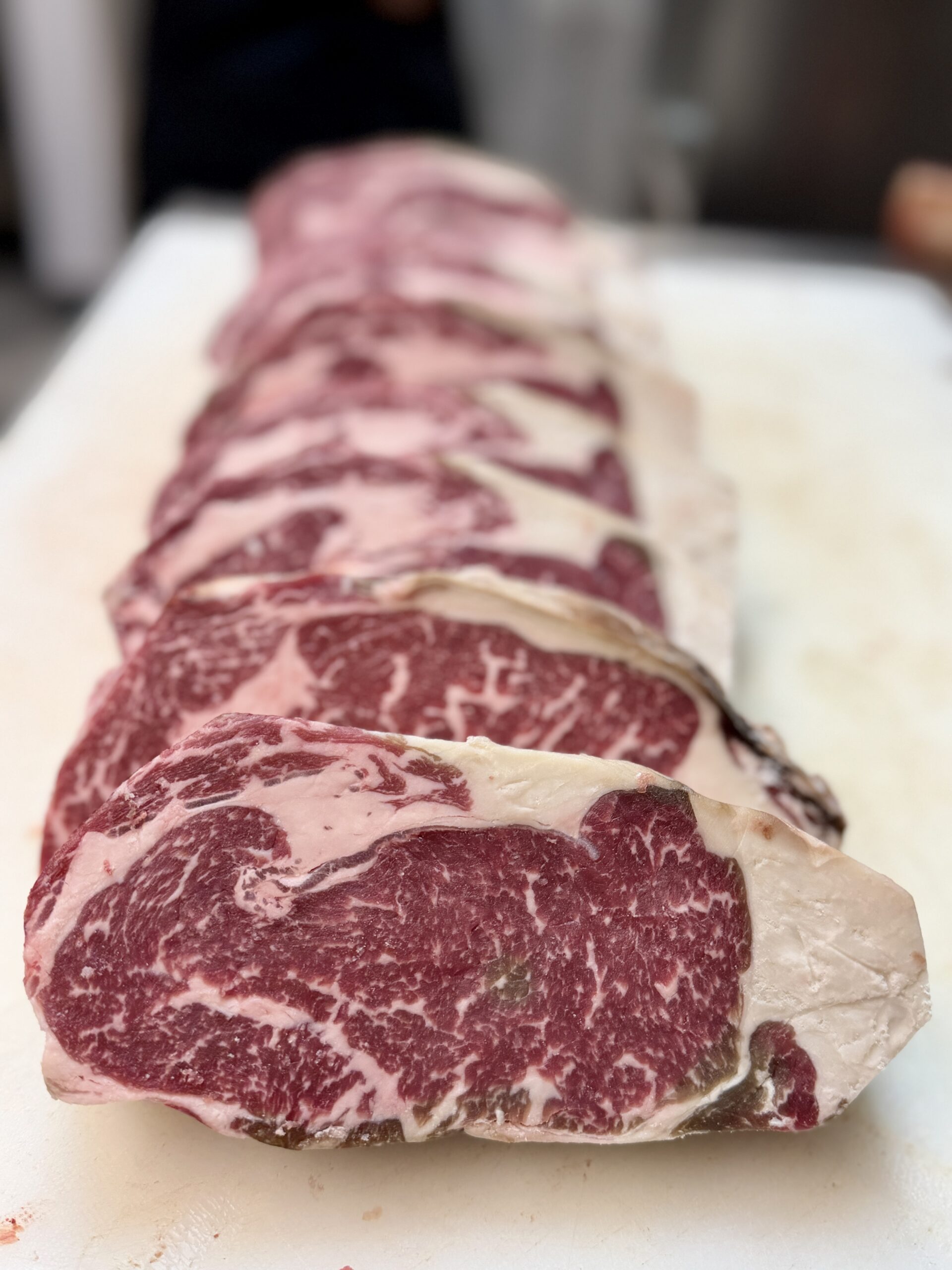
The cleaned section is then divided into individual steaks. Bone-in sections can produce cuts such as tomahawks, T-bones or porterhouses, while strip loins can be portioned into New York strip steaks. Because different cuts enter the cooler at different times, the selections available on a particular evening may vary.
How Does a Dry-Aged Steak Taste?
A properly dry-aged steak should still taste unmistakably like excellent beef. The difference is found in its concentration and complexity. Guests may notice a deeper savory quality, a fuller aroma, a tender bite and subtle roasted or nutty notes.
The final experience also depends on the cut. A dry-aged New York strip will not taste or eat exactly like a dry-aged porterhouse or tomahawk. Marbling, bone structure, thickness and preparation all shape the finished steak.
A Limited, Evolving Steak Program
Our dry-aging program will continue to evolve as new loins and bone-in cuts move through the cooler. Rather than promising the same selection every evening, we will offer each cut when it has completed its aging period and is ready for service.
Ask your server about the evening’s dry-aged offerings, including the cut, size and preparation. Availability is limited, and particular selections may sell out.
Experience Our House Dry-Aged Steaks
Join us in downtown Traverse City and ask about the dry-aged selections available that evening.
Reserve at Cellar & Flame