
From the Cellar & Flame Journal
Something exceptional is taking shape behind the glass at Cellar & Flame.
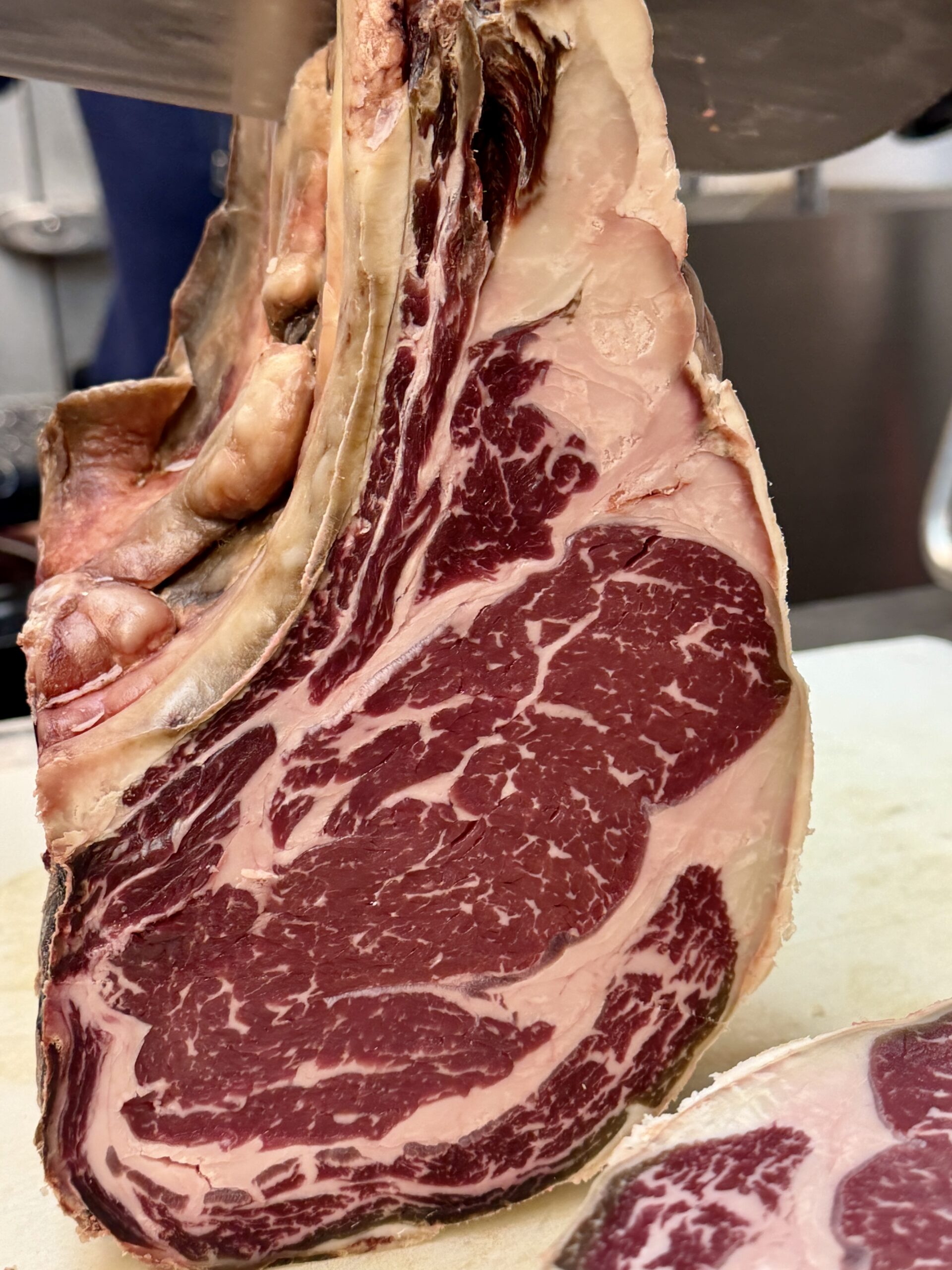
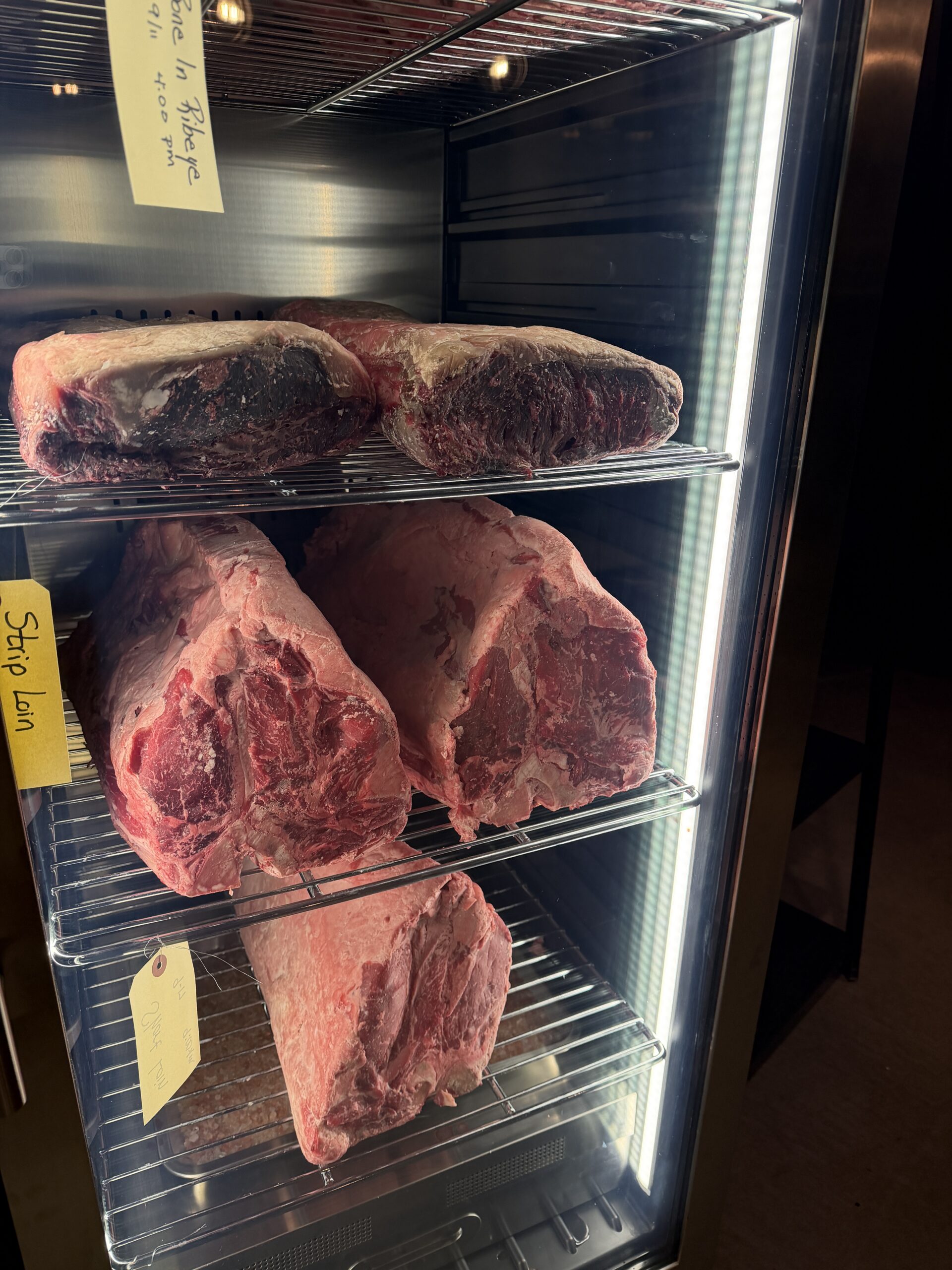
Our in-house dry-aging program is officially underway, with USDA Prime tomahawks and whole short loins resting inside our temperature- and humidity-controlled aging cabinet. It will be some time before these steaks are ready for the grill, but that is precisely the point.
Dry aging cannot be rushed.
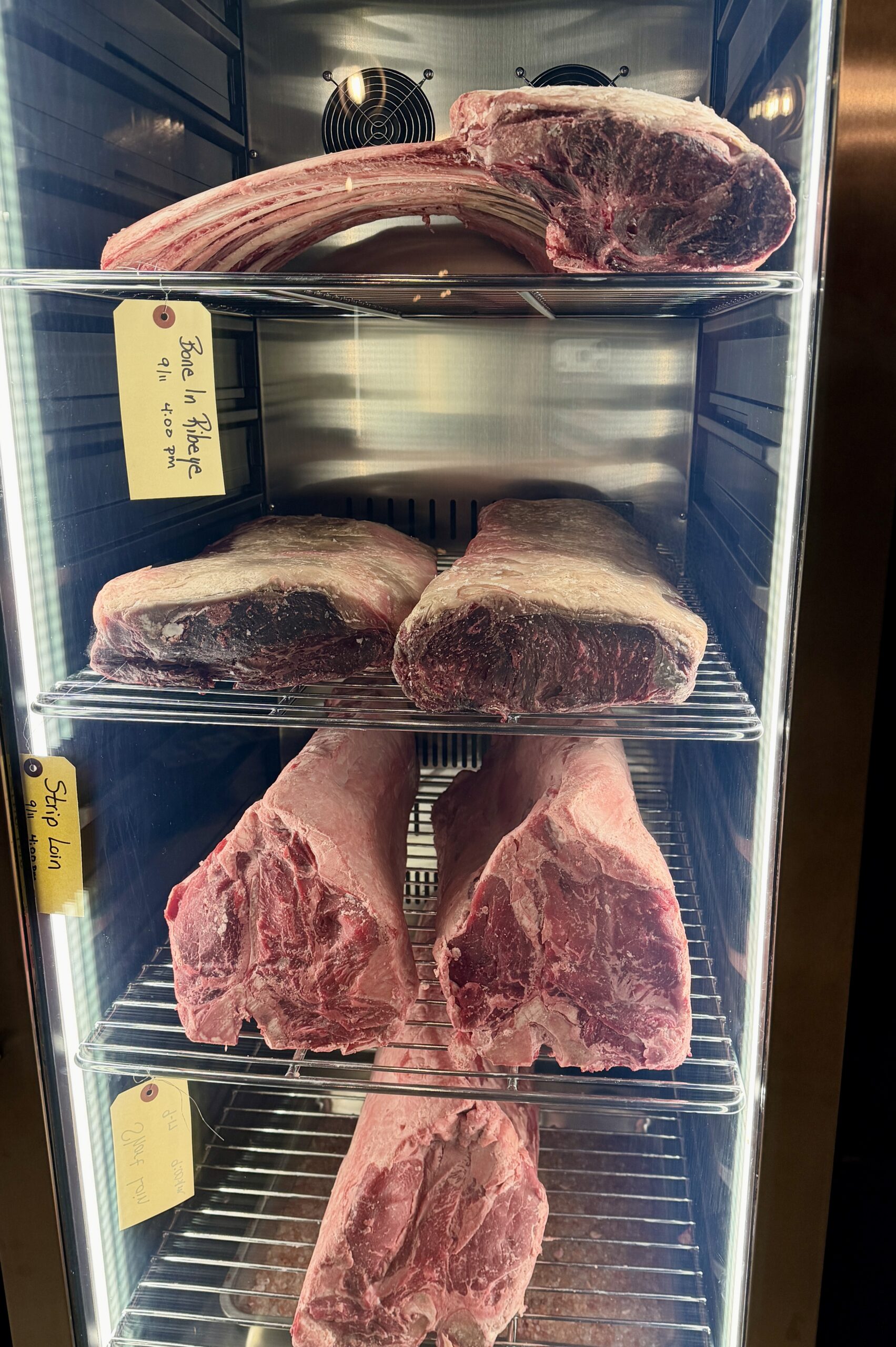
Over the coming weeks, we will share the process from the first day in the cabinet through trimming, cutting, grilling and, eventually, serving the finished steaks.
What Does Dry Aging Mean?
Dry aging is the process of resting large, unpackaged cuts of beef in a carefully controlled refrigerated environment.
Unlike wet-aged beef, which ages inside vacuum-sealed packaging, dry-aged beef remains exposed to circulating air. The cabinet maintains the controlled temperature, humidity and airflow needed for the beef to age properly.
During this time, two important changes occur:
- Flavor becomes more concentrated. Moisture gradually leaves the beef, intensifying its natural flavor and creating the deeper character associated with dry-aged steak.
- Texture becomes more tender. Naturally occurring enzymes work within the meat, helping break down muscle fibers as the beef rests.
The exterior becomes darker and develops a protective crust during aging. That exterior is carefully trimmed away before the beef is portioned into steaks. What remains is the richly flavored center that makes dry-aged beef so distinctive.
Why Does It Take So Long?
The flavor and texture of dry-aged beef develop gradually. There is no shortcut that produces the same result. The beef needs time in a consistently controlled environment, along with regular monitoring throughout the process.
Chef Steve and our culinary team monitor the cabinet conditions and evaluate the appearance and aroma of the beef as it ages. Temperature, humidity and airflow must remain carefully controlled throughout the journey.
Longer does not automatically mean better. Different cuts can develop at different rates, and the goal is to find the point where tenderness, concentration and flavor work together. That decision will be based on the condition of the beef, not simply a date circled on the calendar.
What Is Aging at Cellar & Flame?
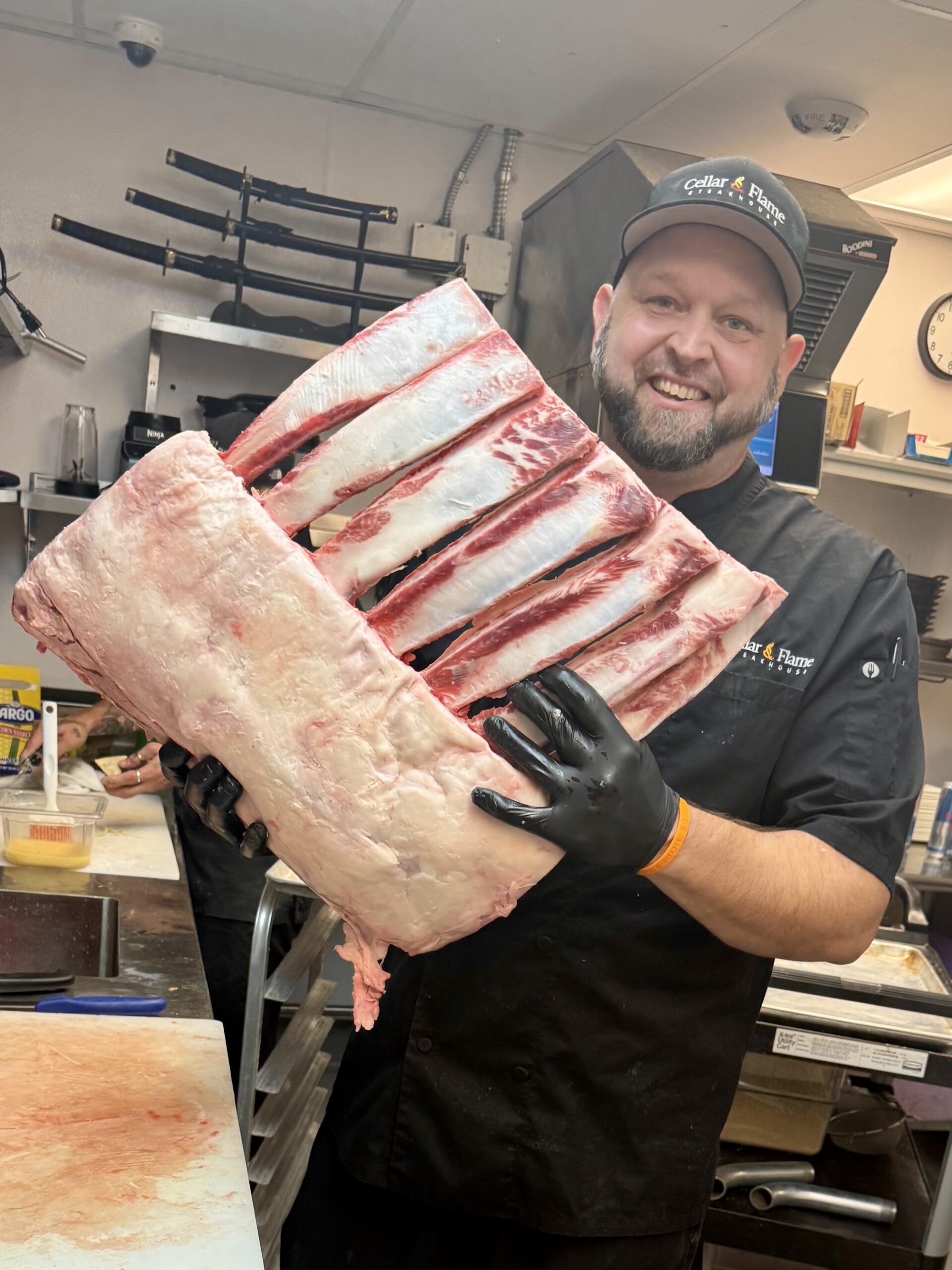
Our first cabinet includes impressive Prime tomahawks along with whole Prime short loins.
The tomahawks are among the most visually striking steaks in the cabinet, but their long bone is only part of their appeal. The ribeye portion is naturally rich in marbling, making it particularly well suited for developing the concentrated character associated with dry aging.
The short loins will eventually be portioned into both porterhouse and T-bone steaks. Each contains a New York strip and a portion of tenderloin on opposite sides of the bone. Porterhouse steaks are cut from the end of the short loin with the larger tenderloin section, while T-bones come from the end where that section is smaller.
Keeping the beef in larger sections during aging protects the interior while flavor develops throughout the process.
What Does Dry-Aged Steak Taste Like?
Dry-aged steak still tastes unmistakably like beef, but with greater depth and concentration. Depending on the cut and length of aging, guests may notice richer roasted and savory qualities, subtle nutty or earthy characteristics, a tender steakhouse texture and a longer, more complex finish.
The final experience also depends on the quality and marbling of the original beef, the length of aging, careful trimming and proper preparation. At Cellar & Flame, dry aging is only one part of the process. Selecting excellent Prime beef, cutting it correctly and cooking it properly over fire remain just as important.
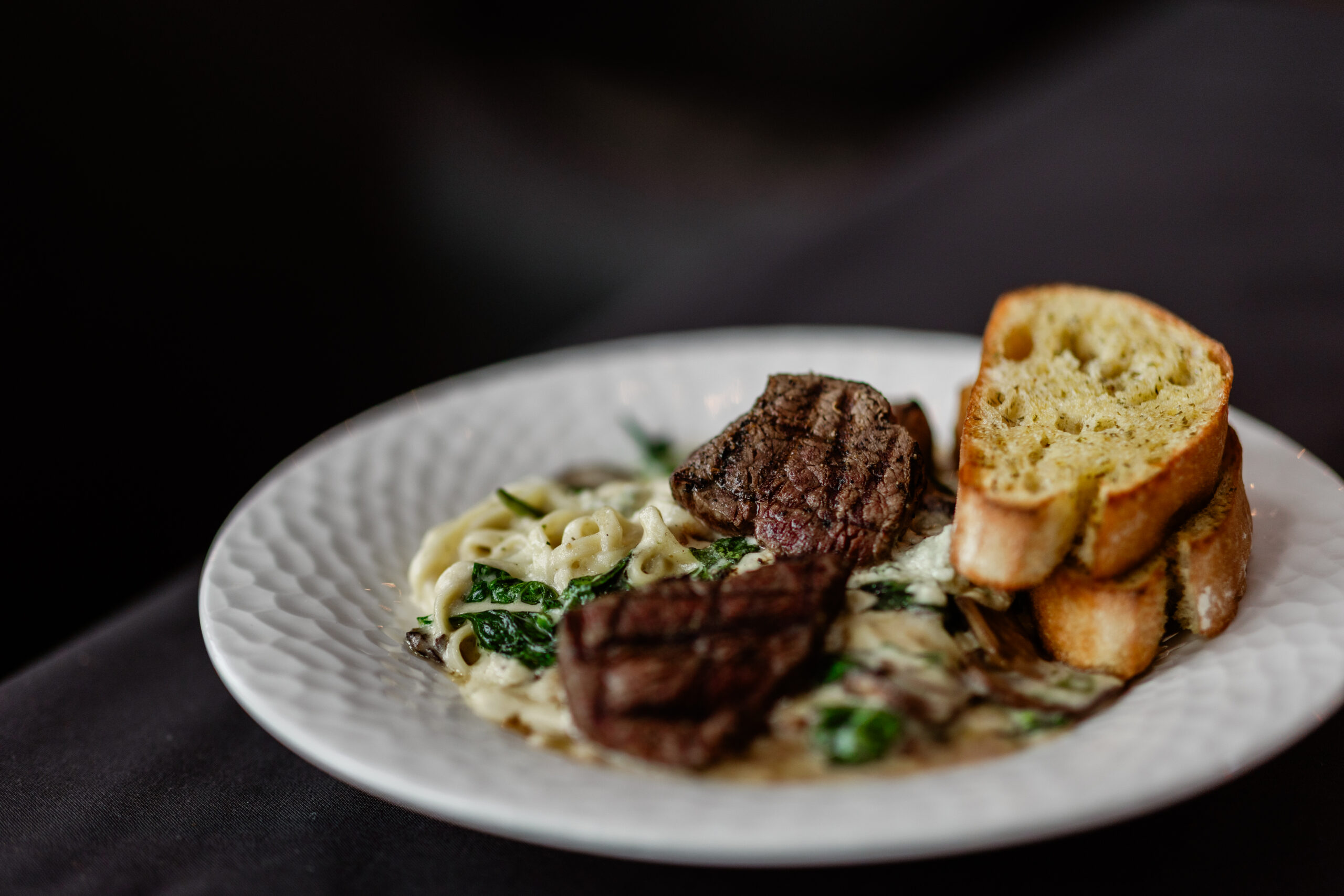
Until then, guests can continue to enjoy the Prime cuts currently offered on our dinner menu.
Follow the Journey from Cabinet to Plate
The response to our first dry-aging photographs has been extraordinary. Guests clearly want to see more than the final plate. They want to understand the craftsmanship, patience and decisions that happen before a steak ever reaches the grill.
We will continue documenting the process, including:
- How the exterior develops during aging
- What Chef Steve watches throughout the process
- How a short loin becomes porterhouse and T-bone steaks
- Why the exterior must be trimmed
- How the finished steaks are prepared
- When the first Cellar & Flame in-house dry-aged cuts become available
This is only the beginning. Follow along as time, careful attention and exceptional Prime beef come together inside Cellar & Flame's dry-aging cabinet in downtown Traverse City.